What Is a Stage Plot?
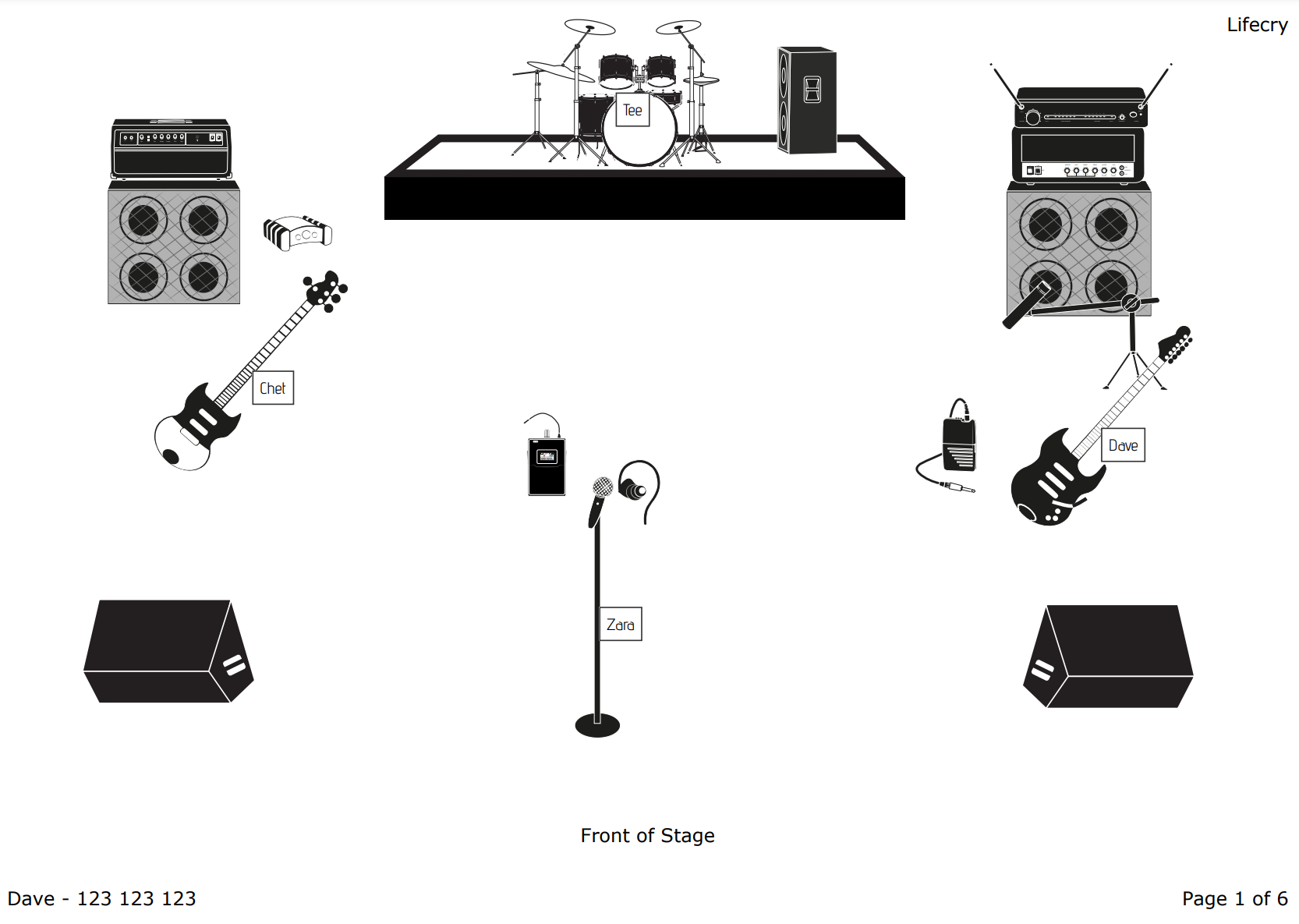
A stage plot is a visual representation of a band’s setup on stage, detailing where musicians, instruments, and equipment should be placed. It’s an essential tool for sound engineers and venue staff, ensuring seamless performances with efficient stage arrangements. Whether you’re a touring artist, session musician, or event planner, having a clear and professional stage plot helps streamline your live sound setup, reducing technical issues and miscommunication.
How to create an effective stage plot
- Instrument Layout: Clearly positioned drums, guitars, keyboards, vocalists, orchestral instruments and any other instruments. Optionally, use a grid if you need that extra precision.
- Microphone & Monitor Placement: Indicate mic stands and speaker positions for optimal sound. Use the monitor mix to specify exact needs.
- Power & Cable Requirements: Specify electrical needs, including volts!
- Backline Equipment: List all amps, DI boxes, and necessary gear for smooth setup.
- Special Instructions: Include notes on lighting preferences, space requirements or unique requests.
- Inputs and Outputs: Make sure the input list and monitor mixes are clear for the engineer, including microphone types, phantom power, boom stand and effects.
How a Well-Designed Stage Plot Enhances Performances
A detailed, easy-to-read stage plot minimizes confusion, speeds up sound checks, and ensures the band sounds their best. Professional musicians and event coordinators rely on these diagrams to maintain efficiency, especially for festivals and multi-band events.